
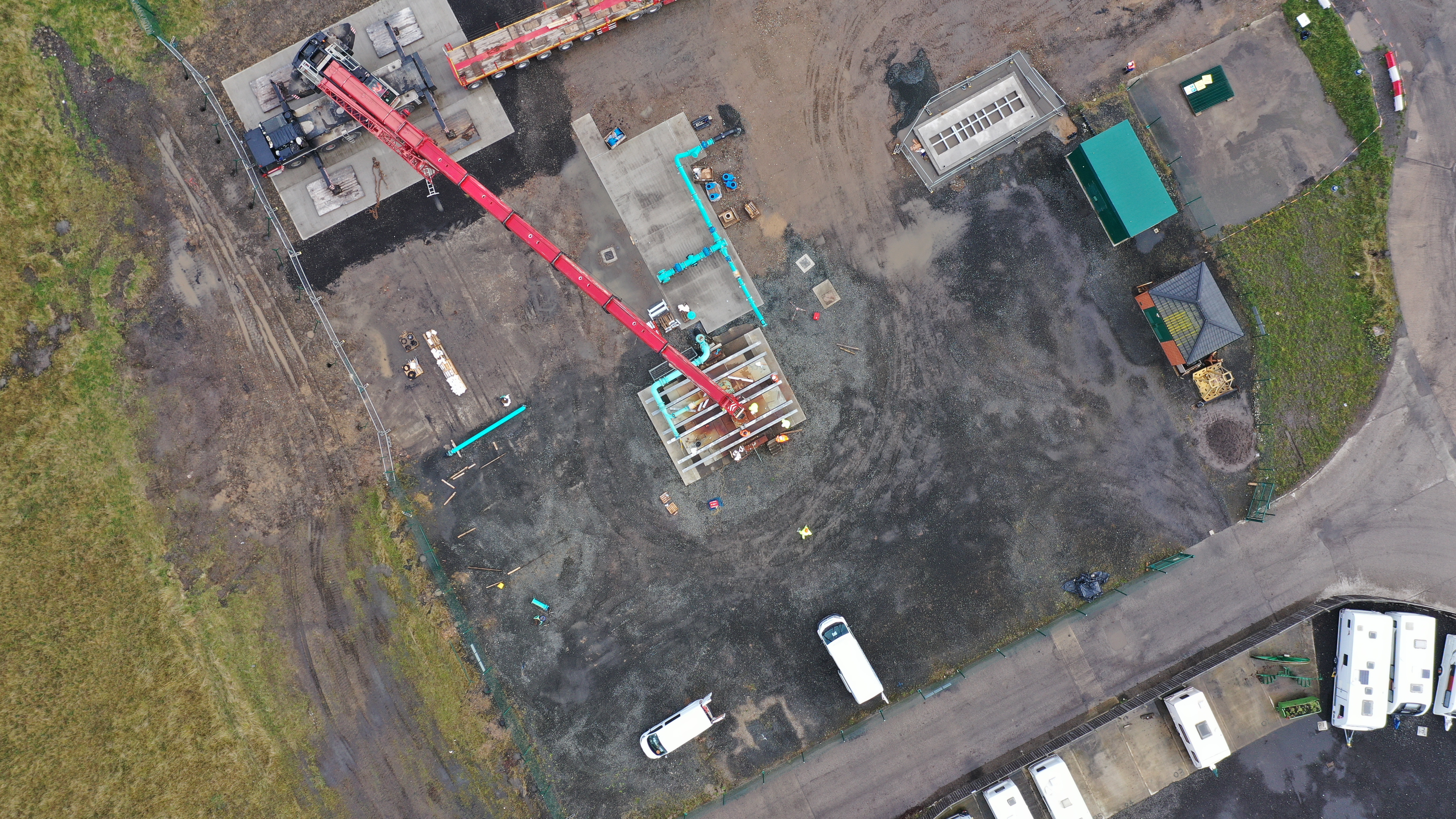
The Site Brief – RA – RAMS, does your drone operator carry one out before a drone deployment? It should be carried out prior to any flight and forms part of the operating practice as laid down in the Operation Manual.
If you’re providing a service to a large project or a film set they may well ask for a RA (risk Assessment) and this will form part of your site brief as well.
If you’re carrying out work for a construction project then a RAMS (Risk Assessment & Method Statement) will normally be asked for. Again the site brief will be incorporated into this along with a much more detailed description of how you work within the sites own risk assessment and the health and safety policy.
Site Brief – RA – RAMS
We have just produced a site brief and RAMs for a large project and the number of pages were eight. Most of the site briefs we issue are around six pages going into the following detail (in Bold). Additional information (in italics) required for large project as such as on construction sites.
Departure Checklist
Few Examples
- Drone and drone equipment being taken
- Support equipment
- Cameras
- SD Cards
- High Vis Clothing
- PPE
- Batteries
Flight Planning/Preparation
Few Examples
- Location
- Permissions
- NOTAMs
- TAFs
- METARs
- ATC permission required?
- Google Maps
- Google Earth
- Roads/Railways/Congested Areas
- Flight Requirement
- Solar Activity
- Airspace
- Time Required
- Heights and distances
- Rights of way
- Obstructions
- Emergency contacts
Site Survey Form
Few Examples
- Site survey before deployment
- Ground state
- Overhead wires
- Buildings
- Trees
- Weather
- Wind speed
- People
- Access
- Additional landing areas in case of emergency
Briefing Form
- Persons involved
- Remote pilot
- Observer
- Weather
- Equipment check
- What needs to be achieved
De-Brief Form
- Any issues
- Any issues require a report or notification
- Has the task been completed to a satisfactory standard
- Minutes flown
- Mechanical issues
- Remote Pilot issue
Risk Areas
- Areas of risk identified

A thorough brief with the pilot and each other’s areas of operation agreed prior to this shoot
Risk Assessment
- Use a risk assessment matrix to assess the risk level and whether it’s acceptable to operate. This should be the risk assessment as used in your operating manual.
In order to successfully manage the risks within your business you will need to think about what might cause harm to people and decide on reasonable steps to prevent that harm. This is called risk assessment and is something you are required by law to carry out.
In order to undertake a risk assessment you need to know the difference between hazard and risk.
- HAZARD – anything that has the potential to cause harm, such as electricity, working at height, chemicals etc.
- RISK – the likelihood that someone could be harmed by that hazard and how serious that harm could be.
The 5 steps to risk assessment
1) Identify the hazards
There is no hard and fast rule on how a risk assessment should be carried out. Walk around, ask questions observe behaviours whatever needs to be done in order to identify the potential hazards present.
2) Decide who might get harmed and how
Once the Hazards have been identified look at who is likely to interact with them and in what way. When identifying people at risk you will need to think about the person undertaking the activity, as well as those that may be affected by it (members of the public, passers-by etc.)
3) Evaluate the risks and decide on suitable control measures
Having identified the hazards and potential people involved you then need to decide what the likelihood is that harm will occur. Risk is everywhere and you are not expected to eliminate all risk completely. What you should do is make sure you are aware of the main risks and do everything ‘reasonably practicable’ to manage them, taking into account cost, time and trouble.
When evaluating the hazards for your risk assessment you should use the hierarchy of control.
- Elimination – Physically remove the hazard
- Substitution – Replace the hazard
- Engineering controls – Isolate people from the hazard
- Administrative controls – Change the way people work
- PPE – Personal Protective Equipment
4) Record your findings
Maintain a record of your significant findings. If you have less than five employees you are not required to write them down but it is a good idea to record them as it will make it easier to review if something changes. If you have more than 5 employees the law requires you to document your significant findings.
5) Review your risk assessment and update if necessary
Change is a part of life and sooner or later there will be new people, equipment, working practices that could introduce new hazards so review your risk assessment at regular intervals.
Additional risk assessment for large sites such as construction Sites
Site Risk Assessment
Site Rules
Site Induction
PPE Required

PPE required here, high vis, safety helmet, safety boots, ear defenders when needed, safety specs
Flight Check Lists
- Take off Checks
- Climb out Checks
- In Flight Checks
- Landing
- Shutdown
The site brief does not always have to be this detailed for smaller projects.
For large projects however it should include your drone site brief, risk assessment for the site where you will operate such as where heavy machinery is, walkways to access site, site operating times.
You also need to include aspects from the sites own risk assessment within your brief.
Once the site brief has been finalised a copy should be sent to the site manager or production team if it’s a film being made.
A copy should be kept with you at all times.
https://sqe.ltd.uk/safety/risk-assessments/


Recent Comments